
ART | EXHIBITION | SURABAYA | 2025
By Vini Salma Fadhilah.
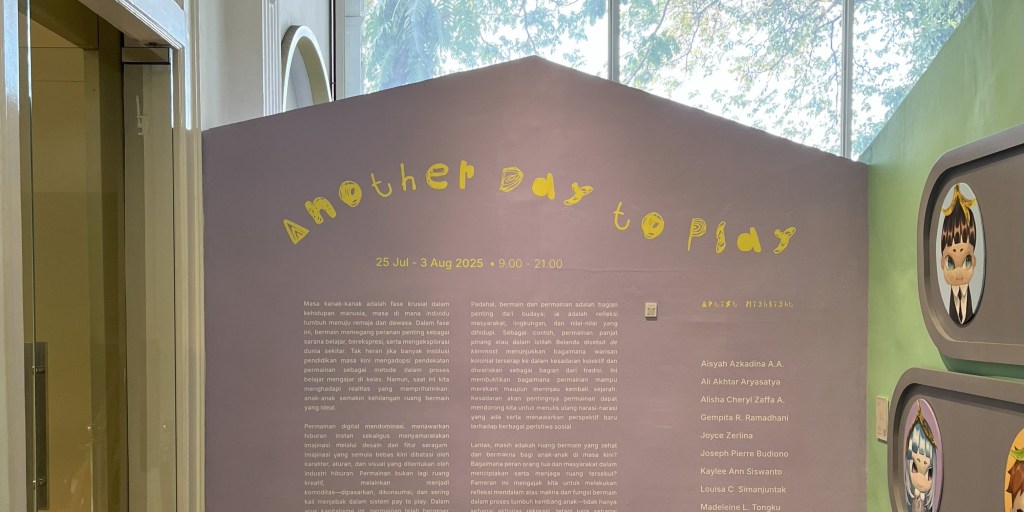
Lotus Art Course (LAC), an art studio for children and teenagers established in Surabaya in 2019, has collaborated with Orasis Art Space to hold an exhibition titled ‘Another Day to Play’. Twelve young artists from LAC are brought together in one space with the goal of re-examining the meaning of play as a part of growth and learning. Taking place from 25 June to 2 August 2025 at the Surabaya Education Museum, this exhibition celebrates National Children’s Day through works born from the imagination, experience, and curiosity of children.
Play is essential for a child’s learning and development, and I am a witness to the shift in its meaning. In the past, I still experienced traditional games like hide-and-seek, but I also came to know video games. Now, children still play together, but each of them is focused on their gadgets, losing the essence of true interaction.
The dominance of digital games has changed the meaning of play. A child’s imagination, once free, is now limited by the uniform designs and rules of the entertainment industry. Play is no longer a creative space but a commodity that is marketed, consumed, and often trapped in a “pay-to-play” system. This has caused play to shift from a cultural heritage to a platform for competition and distraction. Children are trained to be consumers from an early age, accustomed to paying for a playing experience rather than creating one themselves.
The ‘Another Day to Play’ exhibition invites us to reflect deeply on the meaning and function of play in a child’s development—not just as a recreational activity, but also as a foundation for the formation of values, creativity, and cultural identity. This is reflected in the artworks and even the exhibition’s design itself.
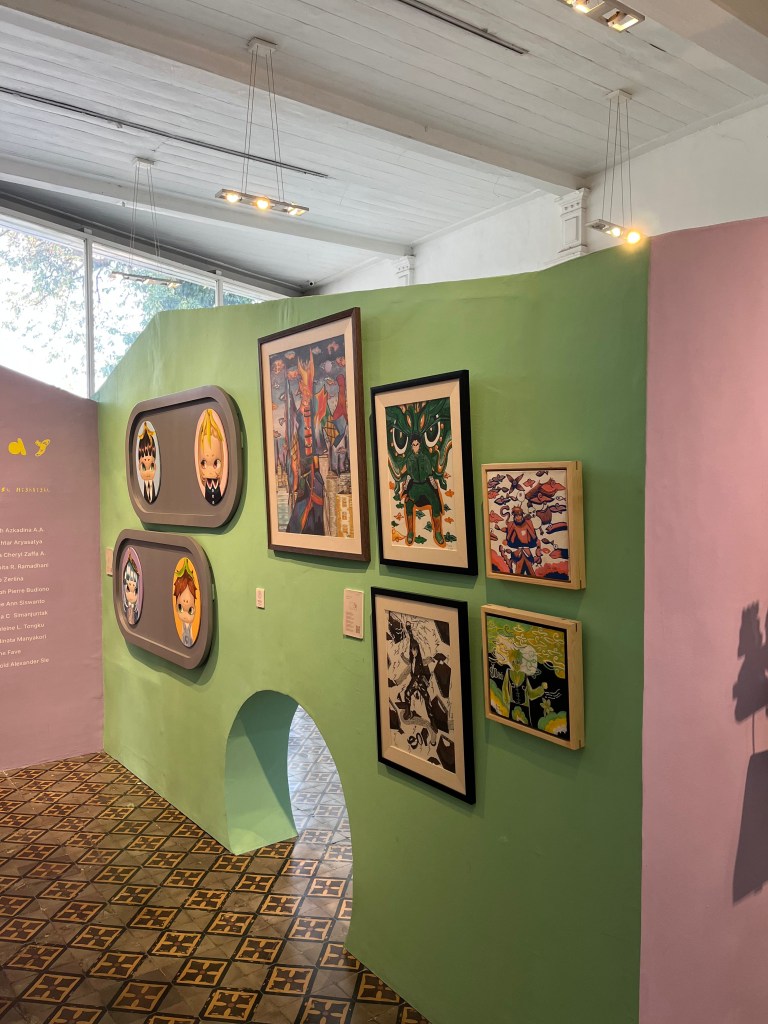
Besides the artworks, the exhibition’s design, which features a partition wall with a semicircular hole at the entrance, is a brilliant idea. The hole was not just a decoration with no purpose. Unbeknownst to them, it invited the children to react. The children who came to the exhibition saw the hole in the wall as a fun ride or obstacle they wanted to pass through. They did not walk around the exhibition according to the prepared path; instead, they moved based on their intuition. For me, seeing that moment reminded me again of the relationship between play and a child’s process of learning the space they are in.
The artists participating in this exhibition include Aisyah Azkadina A. A., Ali Akhtar Aryasatya, Alisha Cheryl Zaffa A., Gempita R. Ramadhani, Joyce Zerlina, Joseph Pierre Budiono, Kaylee Ann Siswanto, Louisa C. Simanjuntak, Madeleine L. Tongku, N. Adinata Manyakori, Nadine Fave, and Raynold Alexander Sie.
They explore their favorite shapes, styles, and themes. Kaylee, Joseph, Joyce, Alisha, Adinata, Louisa, and Raynold explore painting and drawing, while Nadine explores new media art. Ali explores a combination of drawing with the concept of wayang (traditional puppet), and Gempita, Aisyah, and Madeleine explore installation art.
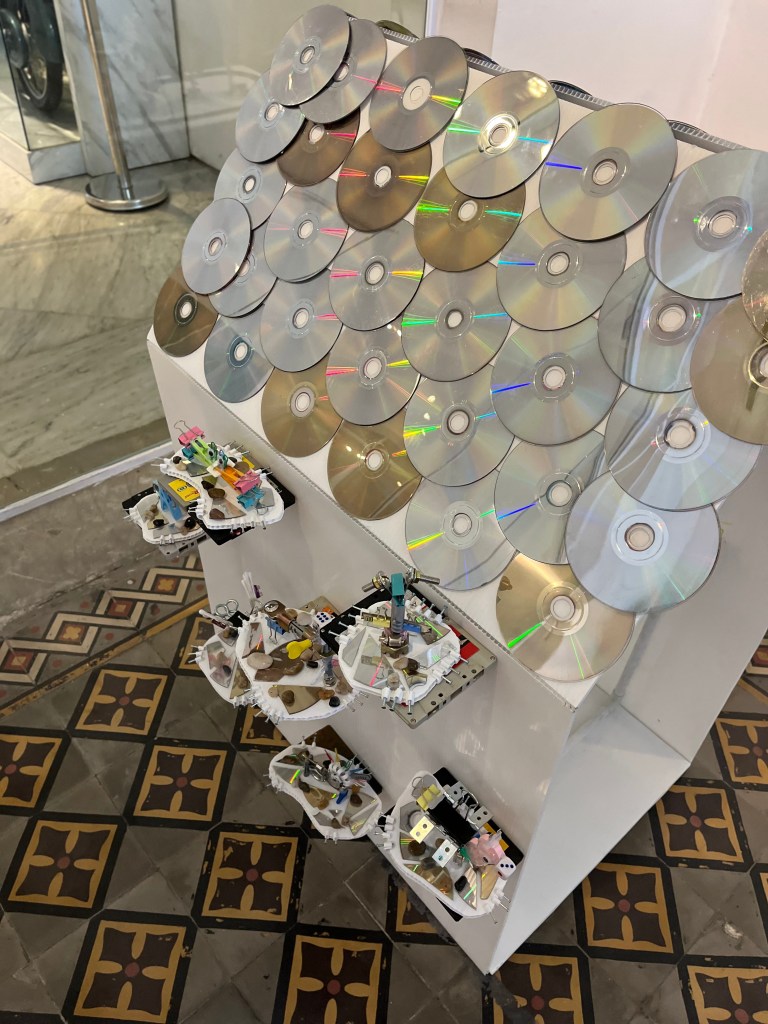
Kaylee created two paintings titled The Peel of Time 1 & The Peel of Time 2, where each character in the panels seems to be interacting through their detailed eye gazes. Joseph’s collection of works, located next to them, explores characters with superpowers in their own respective worlds. Nadine’s new media work is in the corner of the room before the turn. Her work is visually quite eye-catching as she explores various materials such as used compact disks, paper clips, and other leftover items, which she then processes into unique character shapes, both as decorations and toys.
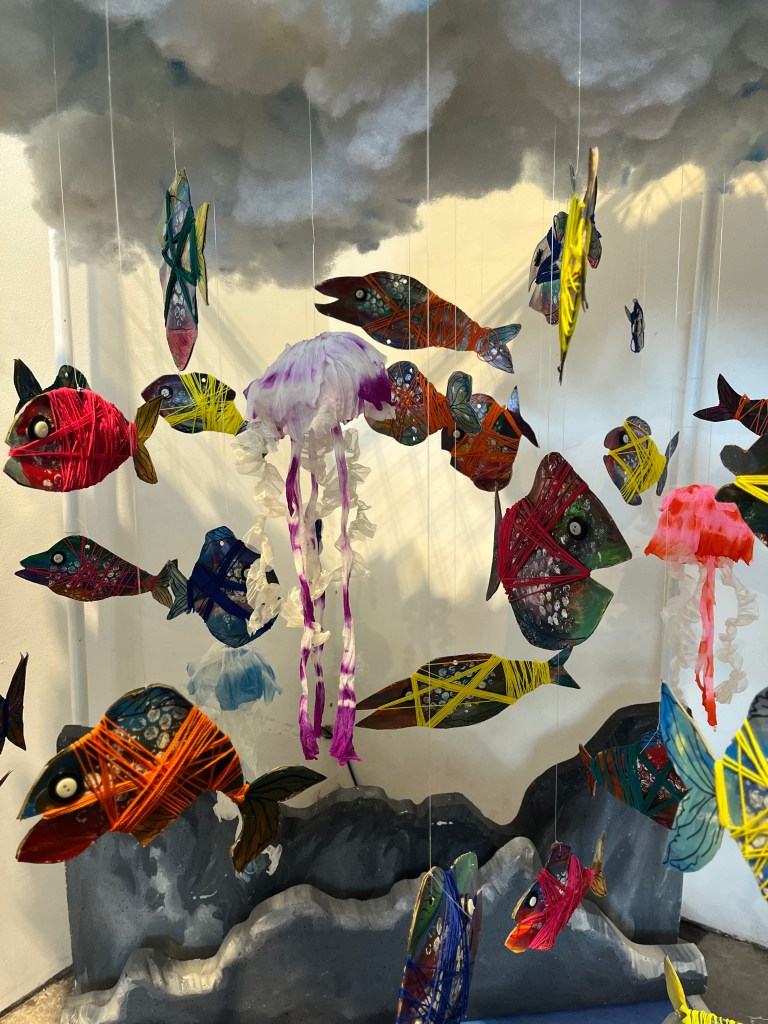
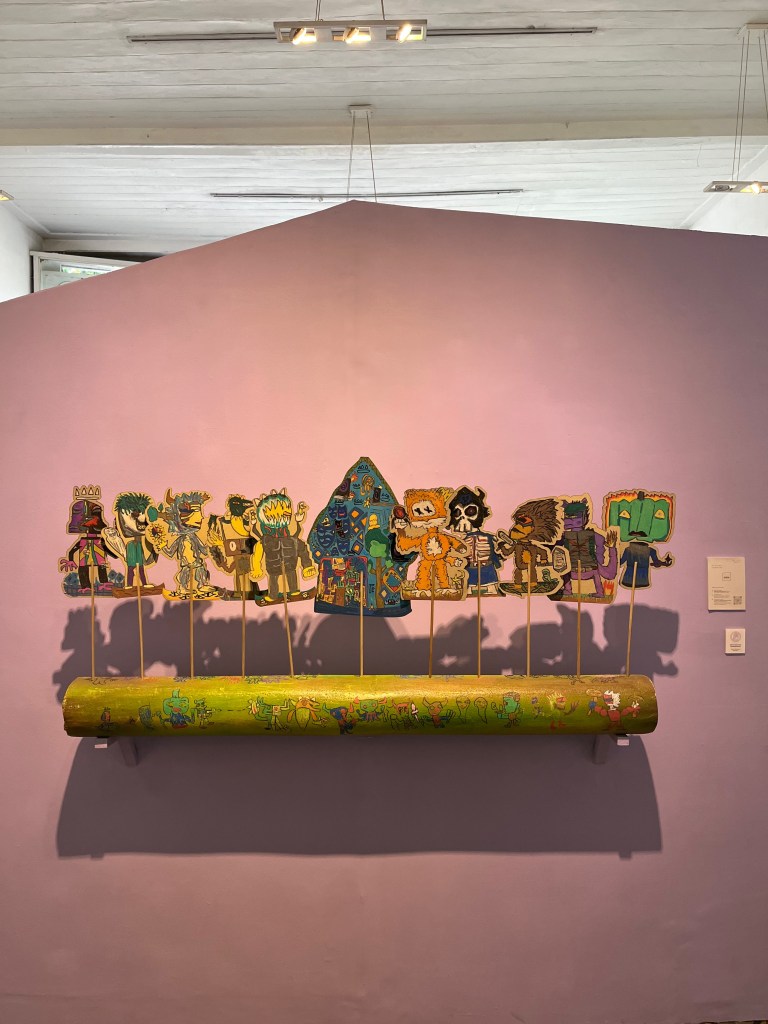
Ali’s work then stretches across a wall, consisting of ten character figures he drew and then gave handles like a wayang puppet, which he stuck into a fake banana tree. This work combines imaginative characters that look modern and futuristic in his drawing style with the traditional concept of a wayang. Next to it are two installation works by Gempita and Aisyah. Gempita created an installation titled Langit Laut Imajinasi (Imagination’s Sky and Sea), which evokes the imagination of a world where the boundary between the sea and the sky doesn’t truly exist. Aisyah’s installation work is a collection of masks she made. These masks are not only decorative but also functional, as they will be used in a dance performance later on, since both of her parents work in the field of dance.

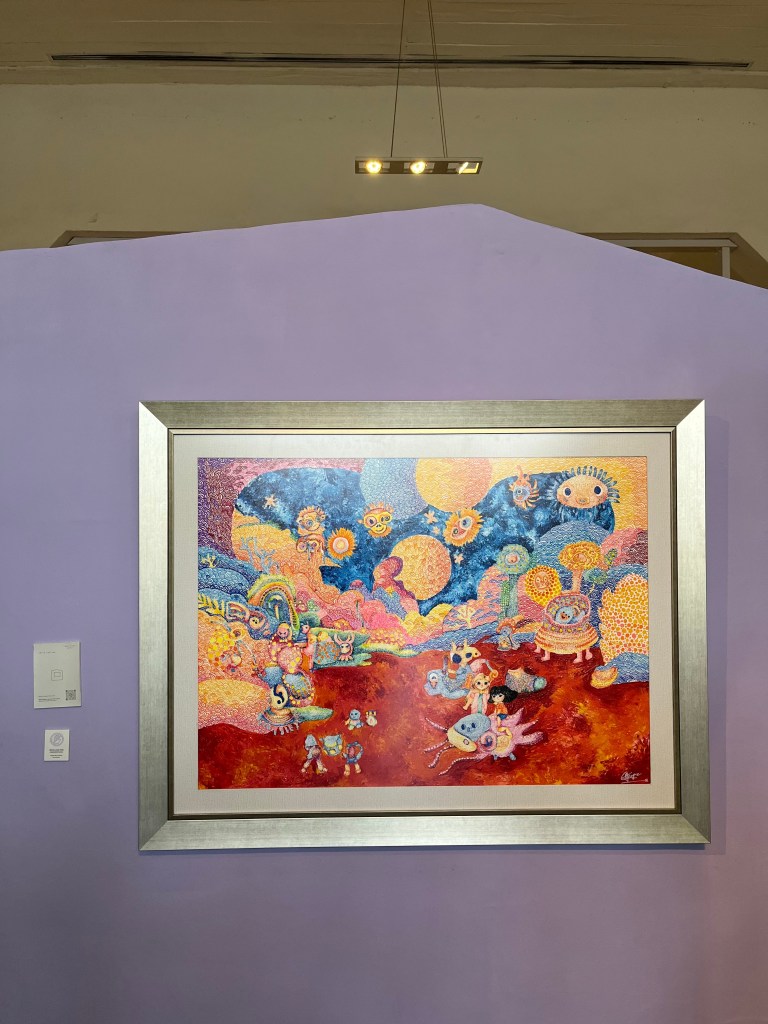
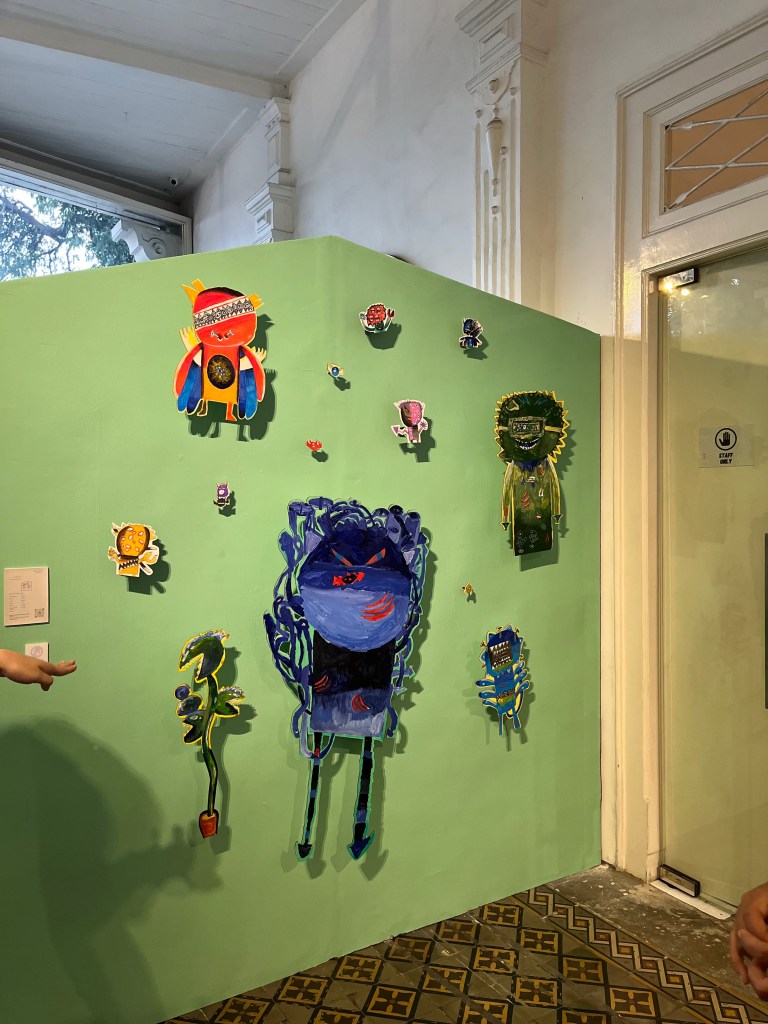
At the end of the exhibition is Joyce’s painting titled Before The Lights Go Out, which explores surreal shapes and combines them with vibrant colors. Next to it are several works by Louisa and Alisha that fill the wall. Adinata’s work, which consists of monster characters he created inspired by ghosts, is displayed by being hung on the wall, but the works are not directly attached to the wall; rather, there is a gap. Therefore, when the works are illuminated by a lamp, a shadow is formed on the wall. Raymond’s work is quite interactive, as he provides 54 playing cards on a table containing a game board and a wall display for the cards that have already been played. The last work is by Madeleine, who explores the role of light in art. Her interactive installation is located outside the museum building, specifically in the garden area.

This exhibition is clear evidence that parental support plays a crucial role in bringing out and developing a child’s potential. Although accessibility and privilege are undeniable factors, the exhibition successfully highlights the power of collaboration among children, parents, and a creative space.
 readesignmagazine.com
Leave a comment