
ART | EXHIBITION | YOGYAKARTA | 2025
A personal review by Vini Salma Fadhilah.
When Art Is Questioned
“War can stop and abolish art. But to this day, art has not been able to stop war.” This quote by Hendro Wiyanto, curator of ARTJOG 2025: Motif Amalan, lingered long in my mind after his opening ceremony speech.
The first time I heard that sentence, questions and a sense of guilt immediately arose within me. How could it be that here, today, I was enjoying the opening of what’s heralded as “Indonesia’s biggest art celebration,” while far away, children, fathers, and mothers were losing their families, possessions, and very right to live, whether due to genocide or corrupt governments?
“So, what is all this for?”
The 2025 ARTJOG MOTIF Trilogy: Deconstructing the Concept of ‘Amalan’
ARTJOG 2025: Motif Amalan officially opened on Friday, June 20, 2025, more than a month ago. From its opening until the completion of this piece, amidst the busyness, the aforementioned question was one of the many that haunted me as I worked to finish this writing.
This year, ARTJOG concludes the MOTIF trilogy, which has been collaboratively designed with curator Hendro Wiyanto since 2023: ‘Lamaran‘ (2023), ‘Ramalan‘ (2024), and ‘Amalan‘ (2025). During a press conference for Road to ARTJOG 2025 at Hotel Majapahit, Surabaya, on April 19, 2025, Ignatia Nilu—a writer, cultural producer, and one of ARTJOG 2025’s curators—briefly explained the three motifs.
The ‘Lamaran‘ pattern focuses on the concept of reciprocal relations and exchange. Ignatia Nilu explained, “Here, ‘Lamaran’ doesn’t just refer to engagement; it also signifies an invitation, a call, or an approach.” She added, “The ‘Lamaran‘ pattern is an inverted curatorial process where all artists are invited.” Thus, this exhibition explores the relationship between artists and the world, as well as between the inviting subject (curator, exhibition) and the invited (artist).
The ‘Ramalan‘ pattern aims to invite artists to imagine the future. This theme is not intended to literally predict events but rather to explore artists’ imaginations and hopes about what might come. Through their art, artists are invited to reflect on possibilities, hopes, and anxieties regarding the future, whether in social, political, or environmental contexts.
“‘Amalan’ is always associated with the act of giving, while artists are often viewed as a profession that contributes minimally to the social life of the community,” Ignatia Nilu continued.
Opening Moment and Program Innovations
Returning to Hendro Wiyanto’s ARTJOG curator’s speech, which I mentioned earlier. He later elaborated, “The Motif Amalan theme itself intends to re-read artistic practices and the function of artworks, in addition to containing aesthetic value. Meanwhile, when the function of art is questioned, it is already imagined as an action. The meaning of ‘Amalan’ in this theme is not limited to dictionary definitions emphasizing ‘cliché’ rewards, but rather a practical endeavor of the artist as an active subject in aesthetic, social, political, and other contexts. Through this, art can be viewed as a ‘gift’ for the common good, beyond profit-and-loss calculations, and often immeasurable in value.”
Hendro Wiyanto continued, “‘Amalan’ is not always directly visible in an artwork. It can take the form of an imaginative impulse derived from witnessing or experiencing a work, which will then encourage real action.” When the speech concluded, I hadn’t fully grasped the concept, as my attention had to return to the ARTJOG exhibition before me.

Summarizing the Motif theme series, ARTJOG runs until August 31, 2025, at Jogja National Museum, Yogyakarta. The opening events began with an exhibition preview for invited guests and media partners, followed by a press conference, and then continued with the opening ceremony in the afternoon, attended by artists and art enthusiasts, cultural figures, art communities, central and local government officials, and supporters from various sectors.
The press conference was divided into several sessions, featuring artist talks with artists participating in this ARTJOG, such as ruangrupa, DEVFTO Printmaking Institute, and Reza Rahadian, who is featured in the Artist Spotlight program.
During the press conference, Heri Pemad—founder and Artistic Director of ARTJOG—introduced a new program titled Spotlight, aimed at fostering collaboration between the visual arts world and other fields.
“This (Spotlight program) continues the previous idea—how the public feels involved and takes ownership of this event by participating and contributing to its execution. With this Spotlight program, we provide space for anyone who wants to participate in ARTJOG. For example, if an agency, corporation, or institution wants to support as a sponsor but doesn’t know what kind of booth to present, we provide the space and will connect them with artists whose work correlates with their interests.”

Gading Paksi, Heri Pemad and Reza Rahadian at the press conference – photo by ARTJOG.
This iteration of Spotlight presented an art installation by Reza Rahadian as part of an art project commemorating his 20-year career in acting. Collaborating with renowned artists and creators—such as Davy Linggar (director), Andra Matin (architect), Garin Nugroho (narrative writer), Kasimyn a.k.a Aditya Surya Taruna (music director), and Siko Setyanto (movement director)—the work is rooted in the ancient Greek philosophy of ‘Eudaimonia,’ which can be translated as true happiness born from the spirit of achieving meaningful goals. This art installation is a moment to find life balance, while also marking Reza Rahadian’s unending journey as an actor in achieving new accomplishments beneficial to many.
This work was one of the most memorable for me. It’s an audiovisual experience that, while watching, initially surprised me but then evoked a sense of sympathy. Its interpretation is incredibly broad, as Reza Rahadian expressed during the press conference, as if he was conveying something he couldn’t articulate verbally to the public. I sensed a paradox within this single work: feelings of pain, fear, sadness, and happiness subtly wrapped on the surface, alongside a pride in what had been achieved.
This work also prompted my reflection on the attachment one feels after watching a film or moving image work. To what extent do we truly like the character, and to what extent is it the actor portraying them? Are these two aspects truly opposing? Or is the character an authentic projection of the performer? Perhaps these questions aren’t truly important, or conversely, are they crucial?
At the close of the three Q&A sessions during the press conference, the moderator asked for a concluding statement from the three panelists of the final session—Heri Pemad, Gading Paksi (ARTJOG Program Director), and Reza Rahadian. Gading Paksi’s statement was the most impactful for me.
“There’s a question that recurs every year: do you have to ‘understand’ art to come to ARTJOG? I believe art is not meant to be understood, but rather to be felt. Just come, watch. As Mas Reza said, we don’t have expectations of a heavy discourse, like visitors furrowing their brows or sweating in contemplation inside. We strive for this to be a festival open to everyone.”
As an art review writer without a formal fine art education background, I felt a profound relief. The burden that seemed to weigh on my shoulders slowly melted away. Who put that “demand” to fully comprehend art and exhibitions, or when it first appeared, I simply don’t know.
Awards and Symbolism Behind the Ceremony
The event then continued with the ARTJOG 2025 opening ceremony, which began with a performance by Acapella Mataraman. Following this, ARTJOG Director Heri Pemad gave his opening remarks, succeeded by guest curator Hendro Wiyanto—some of whose quotes I mentioned earlier.
The winners of the Young Artist Award (YAA) 2025 were also announced. A jury team, comprising artist Eko Nugroho and the ARTJOG curatorial team, selected three out of 16 young artists under 35, based on thematic relevance, medium exploration, and originality in ideas and presentation. The YAA 2025 winners are Faelerie (Wonosobo), S. Urubingwaru (Kediri), and Veronica Liana (Surabaya).
The ceremony concluded with remarks and the official opening by Sunaryo, an artist and founder of Selasar Sunaryo Art Space. In his speech, he underscored how an art festival is not merely an aesthetic celebration, but also a powerful catalyst for stimulating the local economy and tourism sector. Sunaryo also emphasized the urgency of active public involvement and synergistic government support.
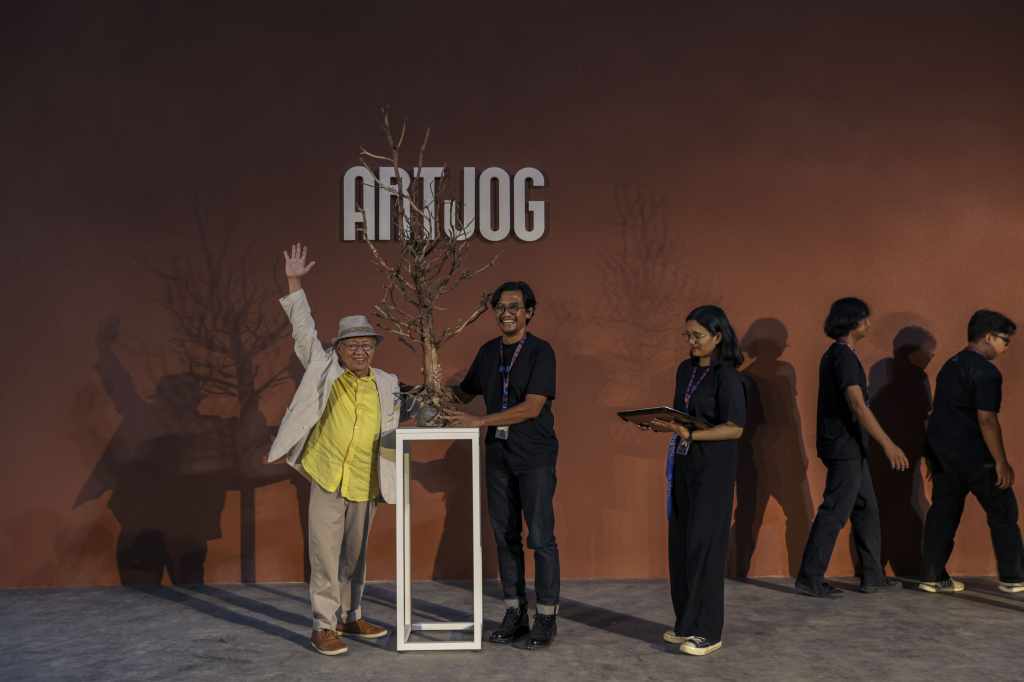
A Pohon Hayat (Tree of Life) souvenir was presented to Sunaryo as ARTJOG’s appreciation for his role and contributions to the development of Indonesian visual arts. This event simultaneously marked the official opening of ARTJOG 2025. The series of opening events was completed with a music performance by Batavia Collective that evening on the ARTJOG Stage.
Commissioned Works: Environmental Reflection and Social Interaction
For its main exhibition program, ARTJOG specifically invited Anusapati (Yogyakarta) and REcycle-EXPerience (Bandung) as commissioned artists to interpret the Motif Amalan theme.
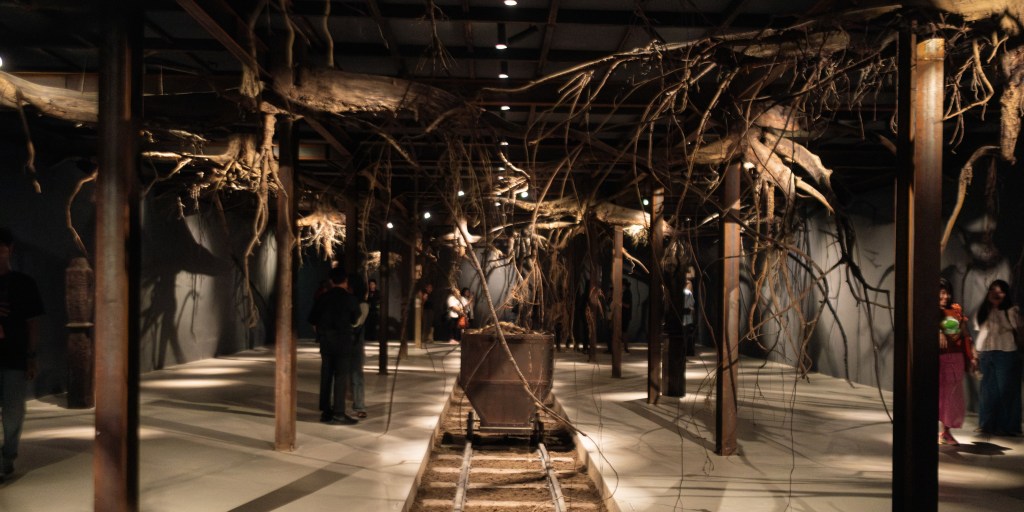
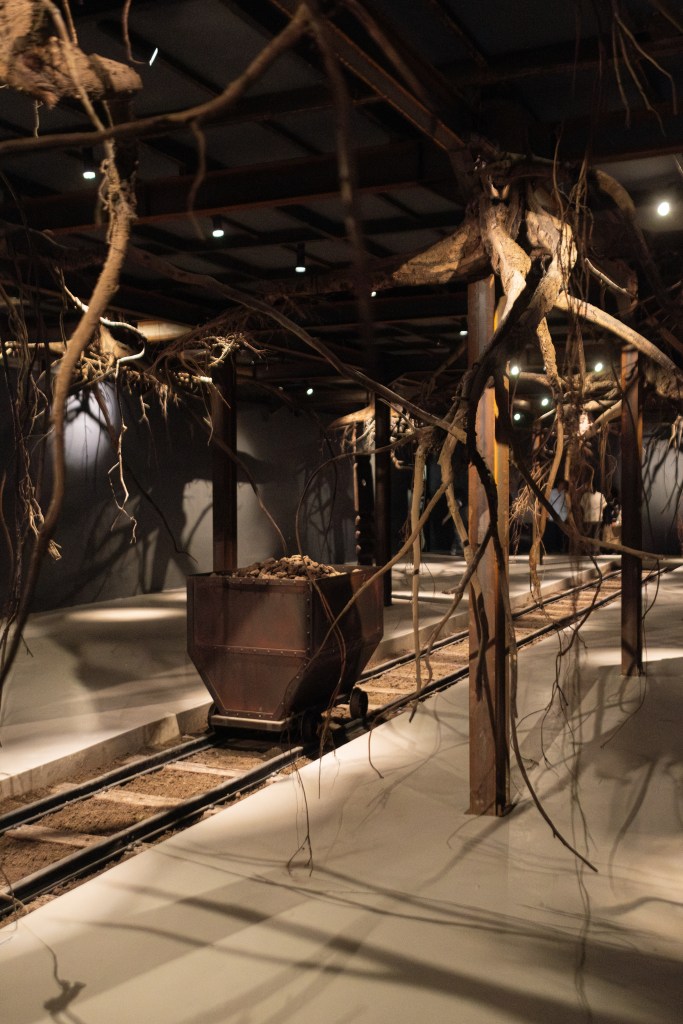
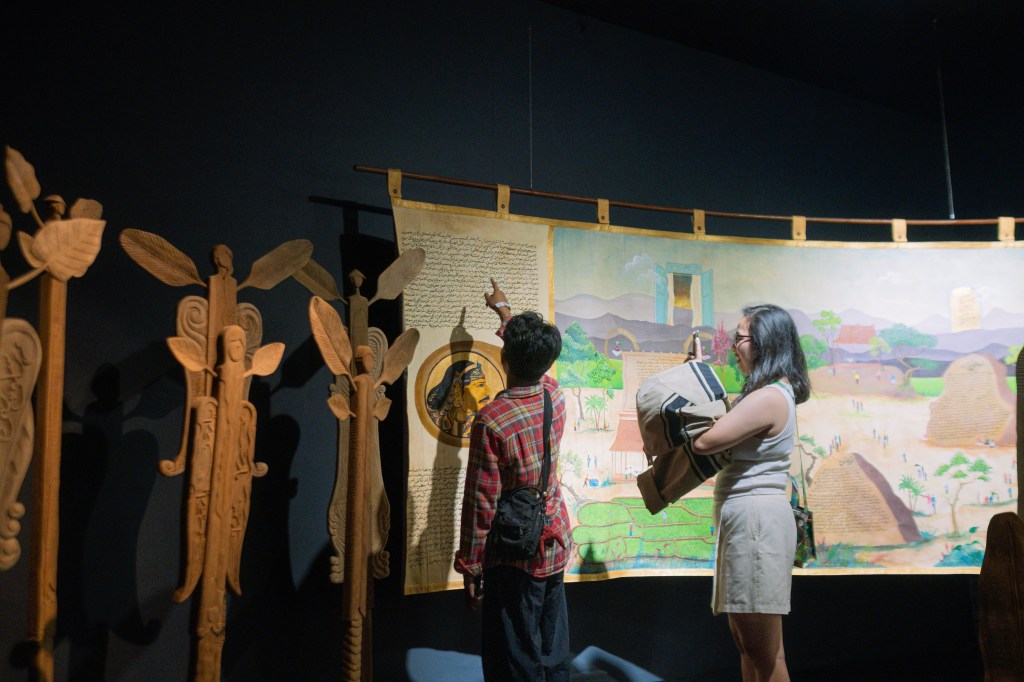
Anusapati presented an installation titled POHON | KAYU (TREE | WOOD), depicting the massive exploitation of forests and mines that causes environmental crises. In the midst of modernity, which often separates humans from nature, Anusapati pierces through this barrier by utilizing dead trees or wood as the primary material for his work. To complement this, Tony Maryana, a sound artist, responded to the installation with sounds to help create new cognitive and perceptual experiences within the piece.
The dim lighting, focused on the artwork, created a transitional space, as if my mind was being reset and prepared for the subsequent works. Large tree roots dangling from the ceiling, rail installations, wooden totems, and the somber atmosphere in this area drew me into an underground cave.
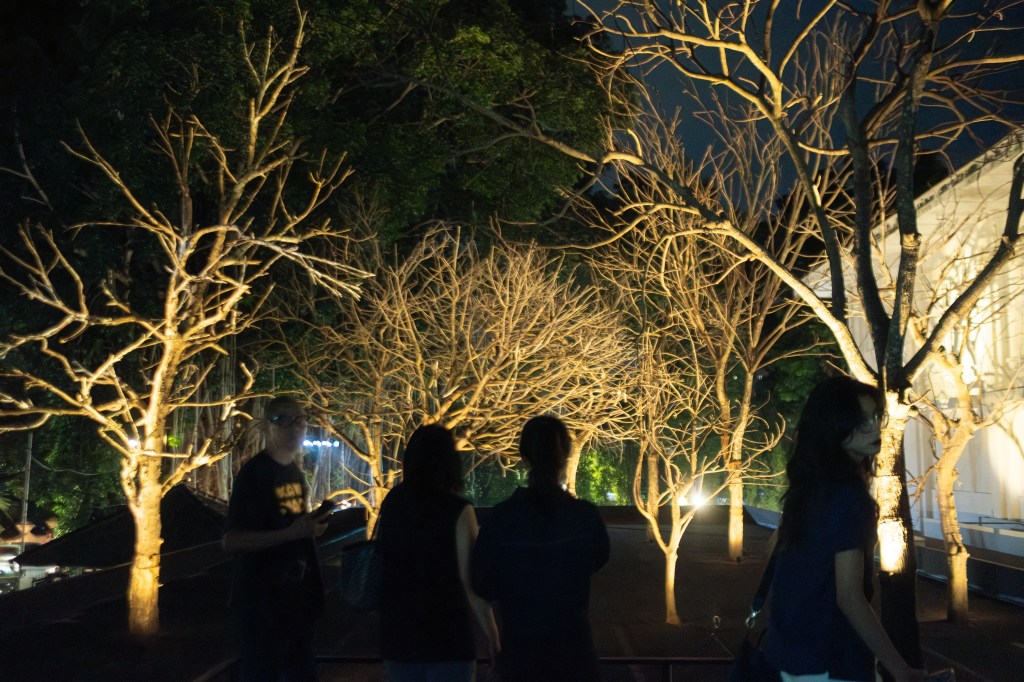
A contrasting perspective emerged as I stepped to the upper floor. The trees whose roots had previously hung above my head now stood at eye level. Moreover, at night, the installation lights highlighting the barren tree trunks and branches created a fascinating visual juxtaposition against the lush foliage in the background.
Meanwhile, for the ARTJOG Kids program, REcycle-EXPerience demonstrated how experimental and playful practices can address inorganic solid waste generated by industrial products, which then become waves of household waste. To embody the spirit of togetherness and care, an interactive installation titled The Love for All Living Creatures allowed visitors to donate their used toys as part of the artwork. Child visitors could also participate in collaborative art-making sessions with REcycle-EXPerience by bringing inorganic waste to be assembled into new works during those sessions.
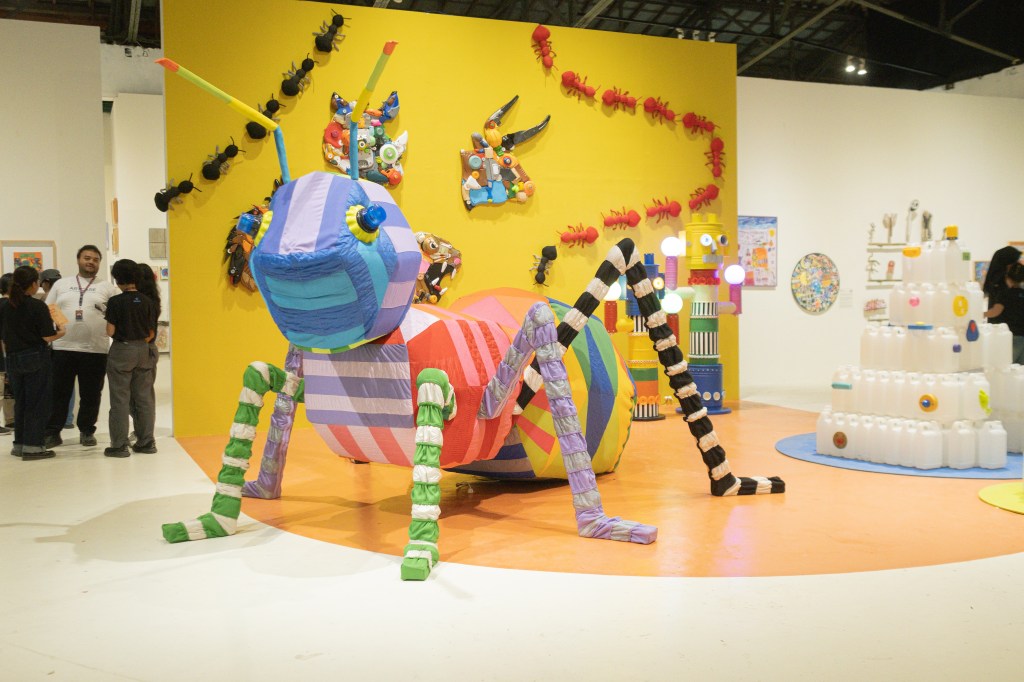
Exploring Collaborative Practices: Murakabi, Ruangrupa, and DEVFTO
In addition to the commissioned artists, the Special Project program also featured several art project presentations from Murakabi Movement (Yogyakarta), ruangrupa (Jakarta), and DEVFTO Printmaking Institute (Bali).
Briefly, Murakabi Movement presented an art project based on collaborative and interactive learning activities, aimed at re-questioning the idea of shared living spaces. Featuring elements of trasah batu (stone paving) construction, this work titled Tanah Air Beta reminds us of the importance of sustainable life cycles and invites us to reformulate the relationship between land, water, and fellow beings.
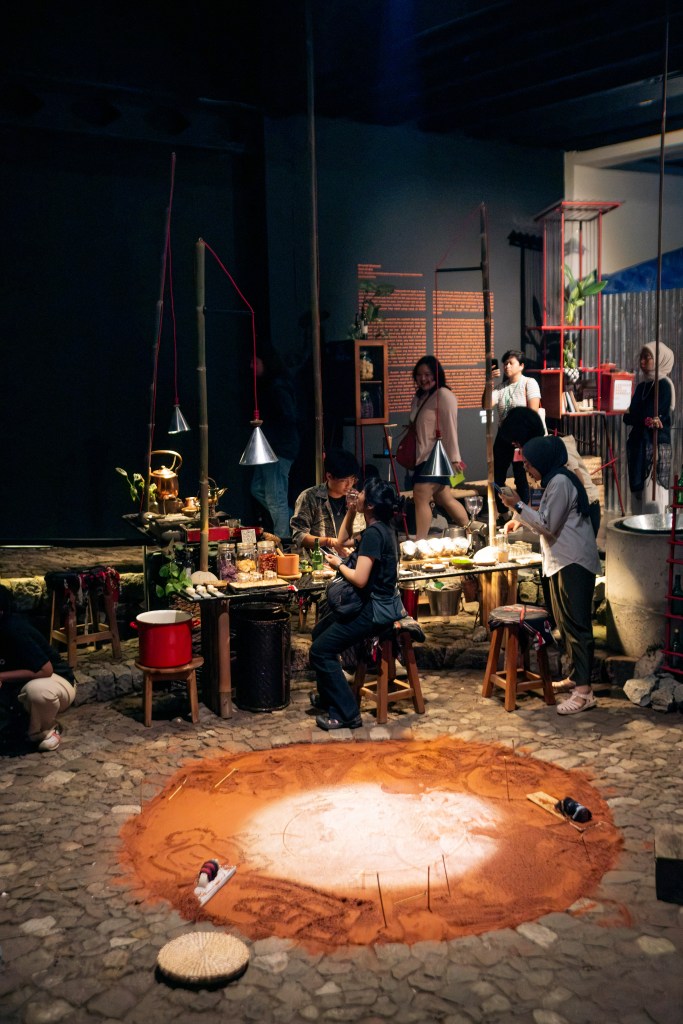
“Generally, the title is indeed Tanah Air Beta. As a collective, we highlight how Indonesians value their culture and locality. We often feel or hear that something from abroad or the West is better, healthier, superior, even more sacred. Why don’t we become—to use Gen Z’s term—an alpha, instead of just stopping at the beta process? We want to invite people to revisit local culture. Take this trasah batu as an example: it doesn’t use cement and can absorb water, simply relying on interlocking keys. This is better than asphalt because asphalt combustion produces high carbon emissions, whereas this does not. It can also absorb water through its pores. With so many good qualities, why don’t we use this for the roads we know today? This installation is a celebration of water and land, so these kinds of conversations are what we want to bring forth, as well as a celebration of locality and a re-excavation of past values. We must be critical of modernism; let’s not devolve instead of evolve because of it,” explained one member of Murakabi Movement while serving fragrant tea at the bar table within their interactive installation.
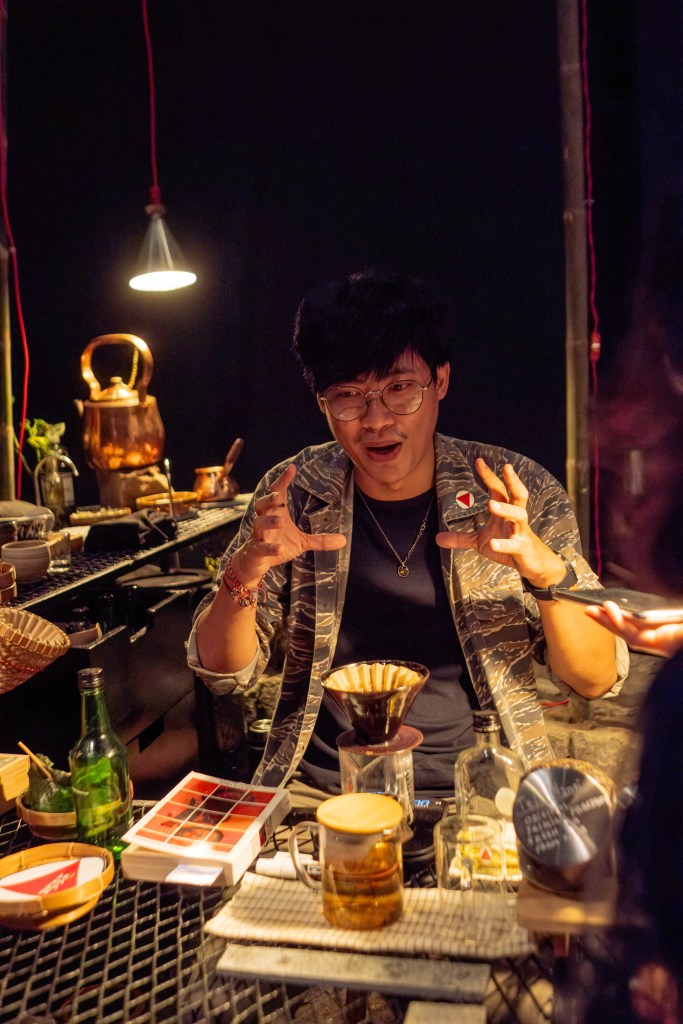
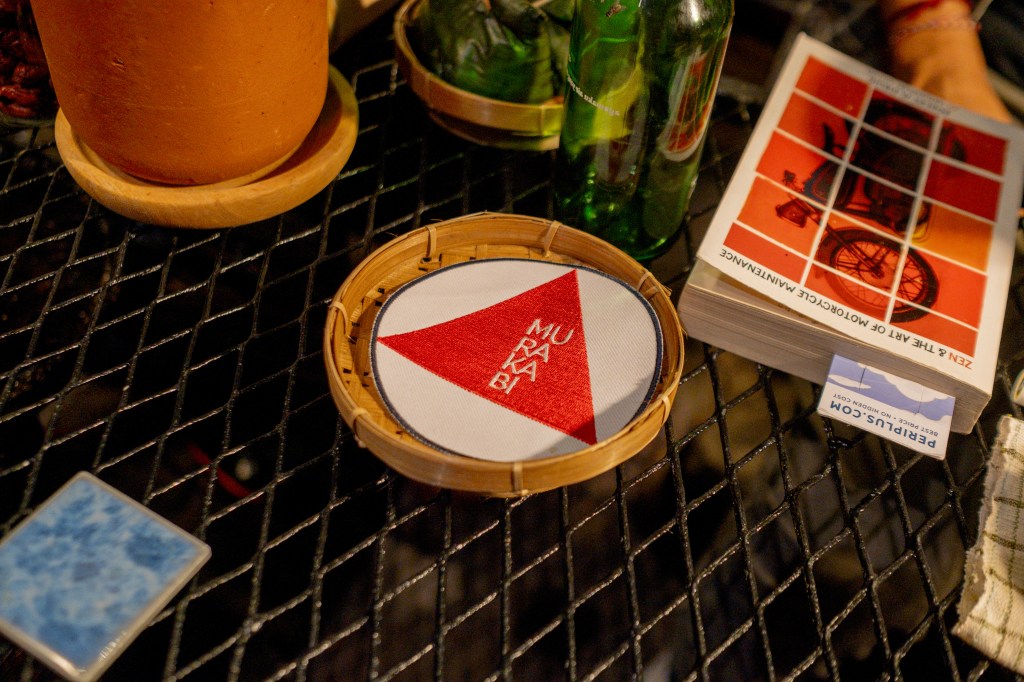
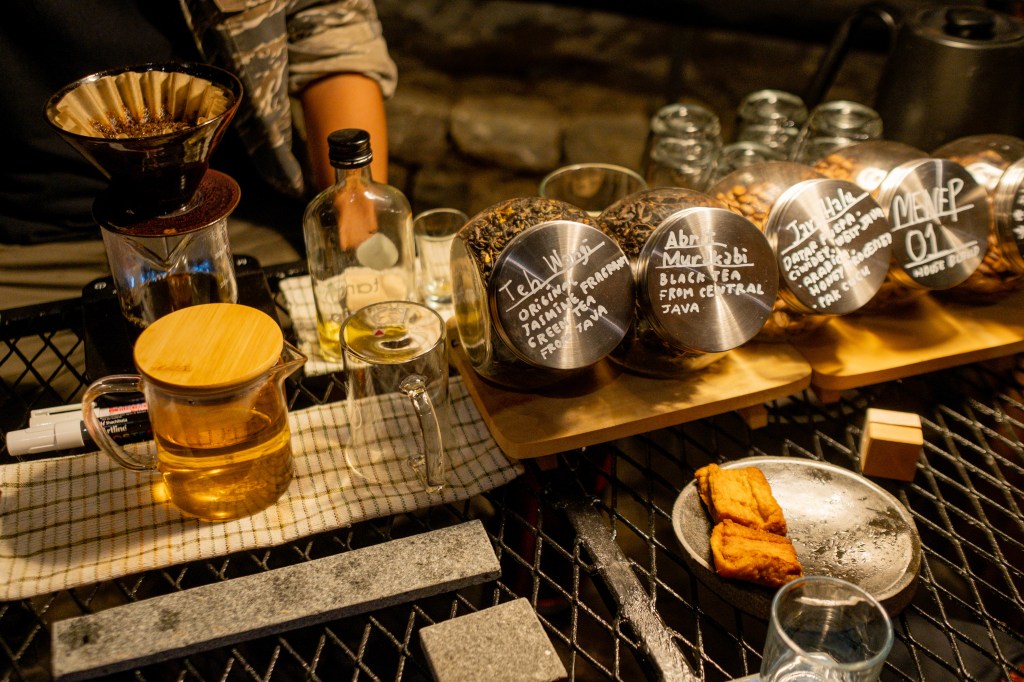
I enjoyed and spent a considerable amount of time at this installation; it was like an oasis amidst the onslaught of other artworks that had been and would be enjoyed. Watching the Murakabi Movement team serve drinks and snacks while chatting with visitors at the bar table, and observing some visitors playing with the earth installation in the center, felt profoundly calming.
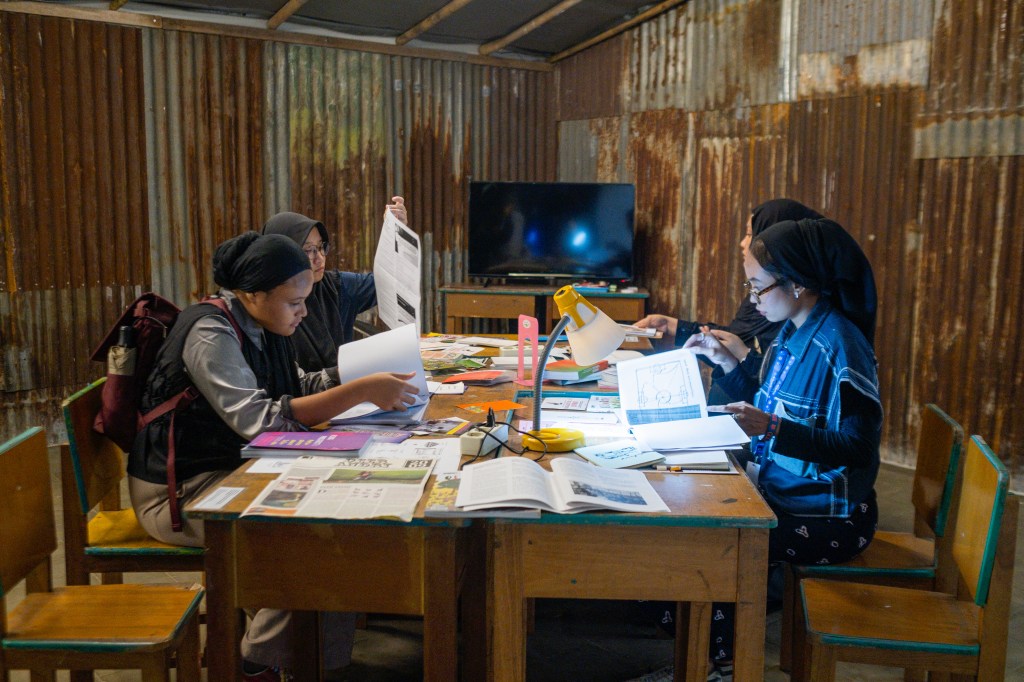
Meanwhile, ruangrupa, located right next to the Murakabi Movement’s installation, transformed its presentation space into a collaborative learning garden. This space emphasized the richness of local contexts tailored to the needs of the participants. Referencing the Taman Siswa school system founded by Ki Hajar Dewantara in Yogyakarta in 1922, ruangrupa presented a learning model that is not one-directional but relies on collaboration between educators and participants. Eleven selected participants will be brought together with instructors from various backgrounds, including fine arts, film, music, architecture, and economics, and will undergo a learning process that extends beyond the classroom. By the end of the period, each participant is expected to create a work that will later be exhibited at ruangrupa’s 25th-anniversary celebration this October in Jakarta.
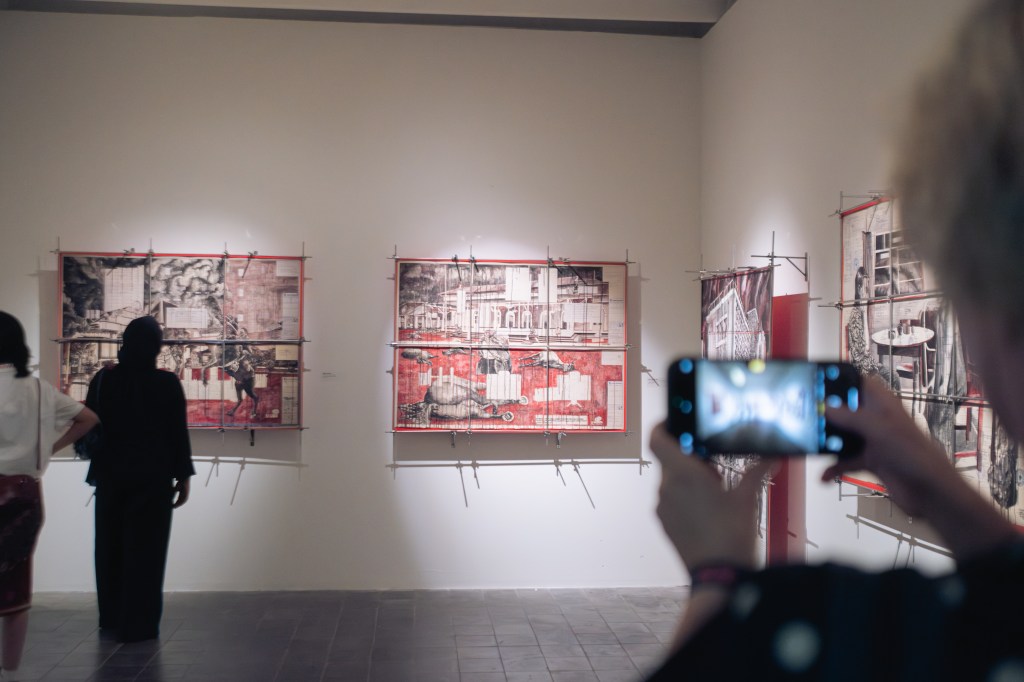
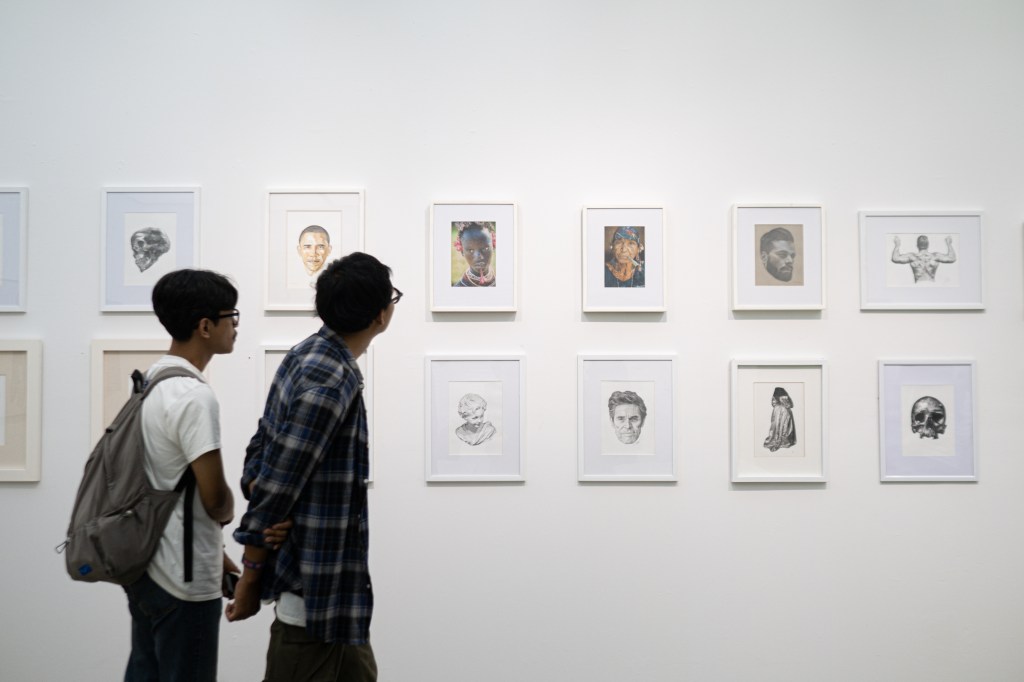
DEVFTO Printmaking Institute is a graphic art printmaking studio in Bali, founded by Devy Ferdianto in 2021. Its presence at ARTJOG reflects its practices and dedication to developing printmaking in the visual arts field. Collaborating with and presenting works from renowned artists like FX Harsono, DEVFTO’s presentation this time not only showcases its contributions to graphic artists but also opens up a space for the public to delve deeper into the development of the graphic art world itself.
“DEVFTO is an open printmaking studio, or graphic art printmaking studio, whose task is to serve all artists. Hopefully, this can be a form of ‘amalan’ for artists in Indonesia. We have several main programs, namely education that prioritizes empowering local artists. This includes workshops, artist-in-residency programs, as well as commissioning and admissioning—services that may not be widely known in other disciplines. For this ARTJOG, we invited 27 artists, each creating one to two works, totaling 40 displayed pieces. The concept—an idea from Mas Pemad—is to move the graphic studio into the exhibition. This was not easy for us. In our room, you can see a small machine, and we will also hold workshop sessions. There’s the lithography technique, which is still not popular. Then there’s linocut art. And there’s tetrapack printmaking, which utilizes recycled tetrapack packaging as a printing matrix. The lithography is specifically for invited artists, while the other two techniques are open to the public,” explained Devy Ferdianto during the press conference.
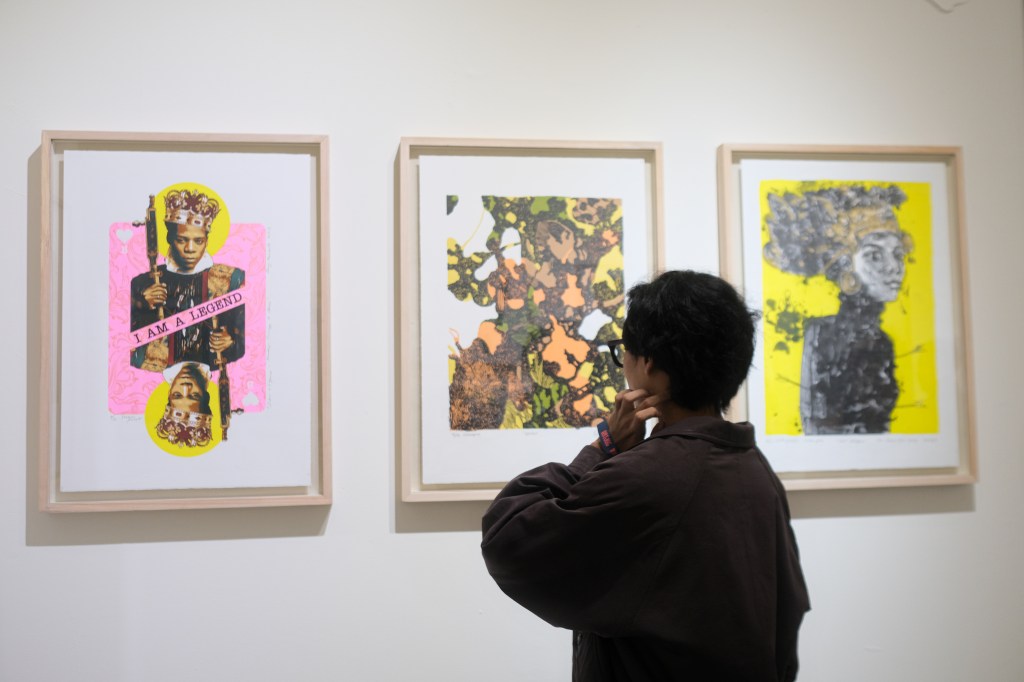
Almost every work exhibited in the DEVFTO room was captivating. I often paused, admiring the visuals, techniques, ideas, and narratives the artists tried to convey.
Spotlight on My Personal Picks
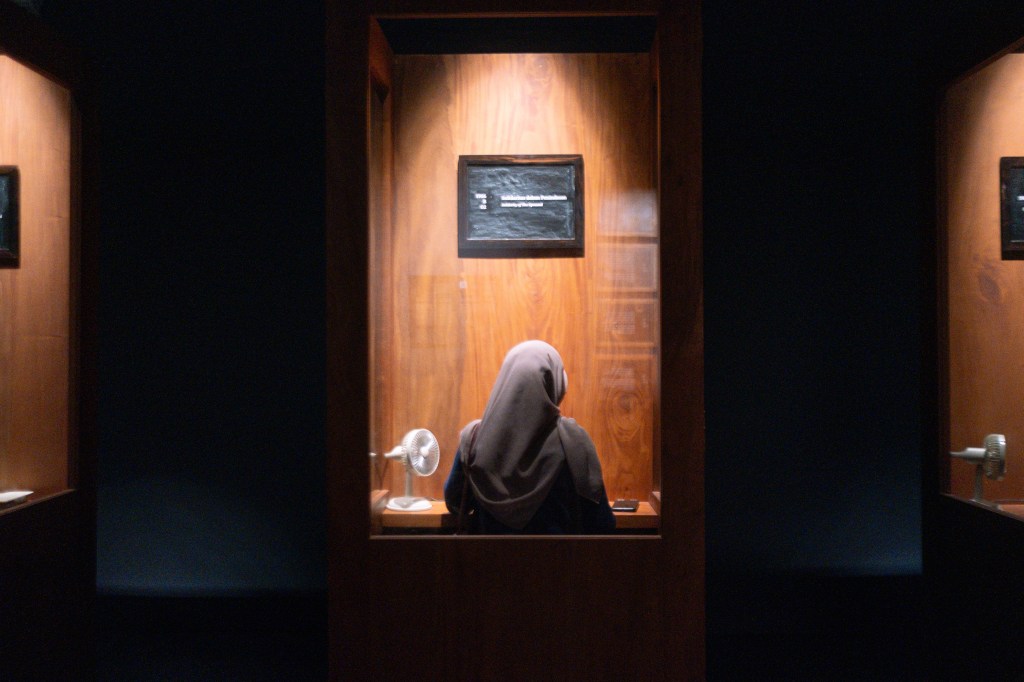
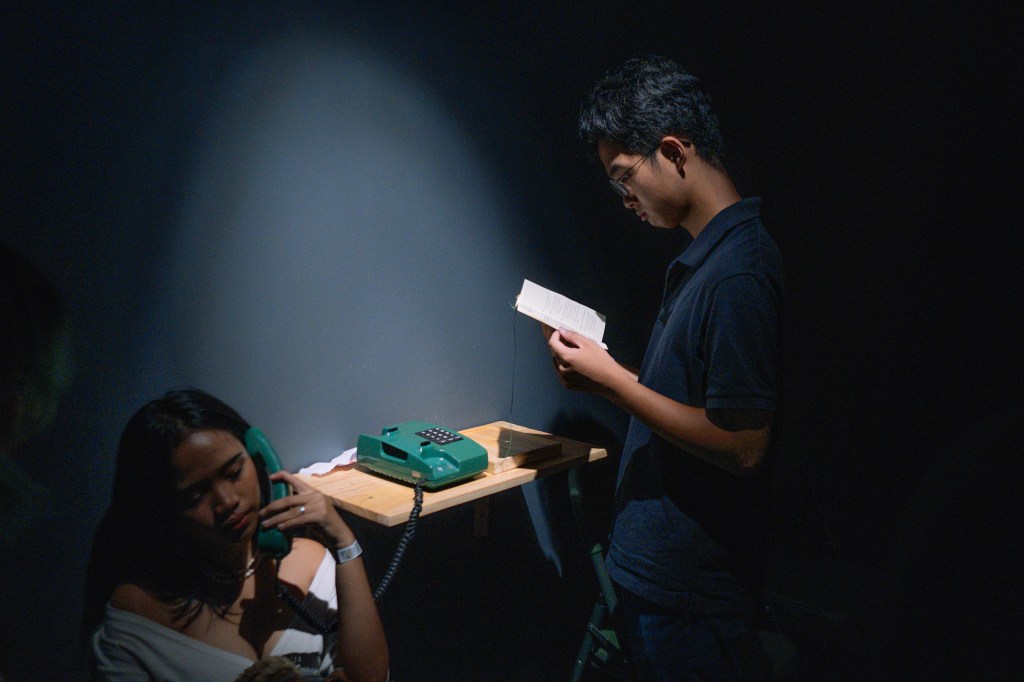
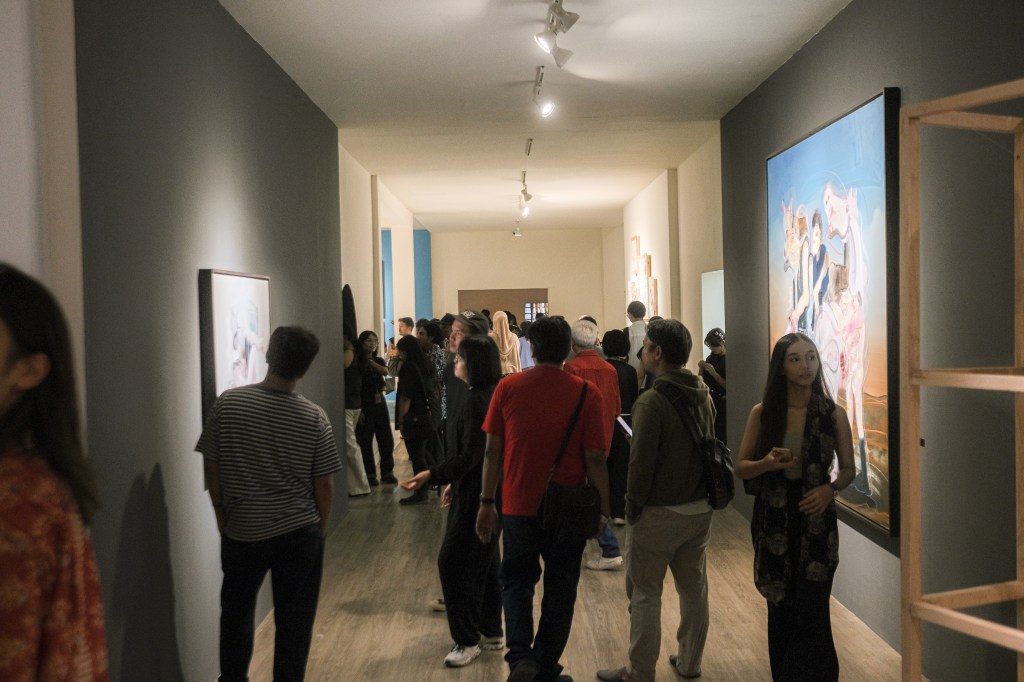
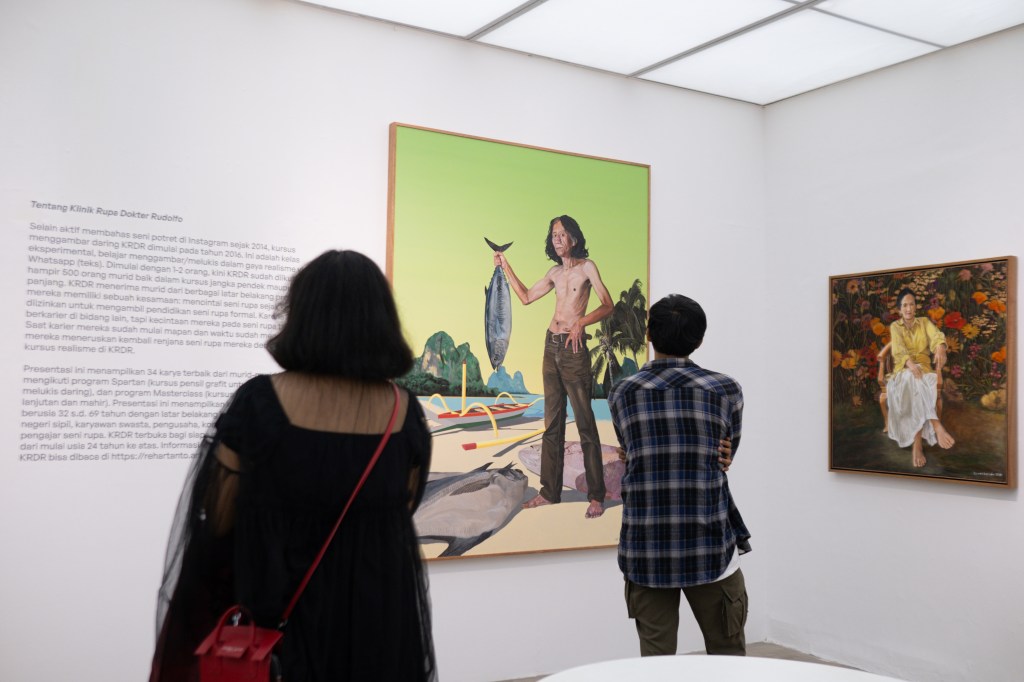
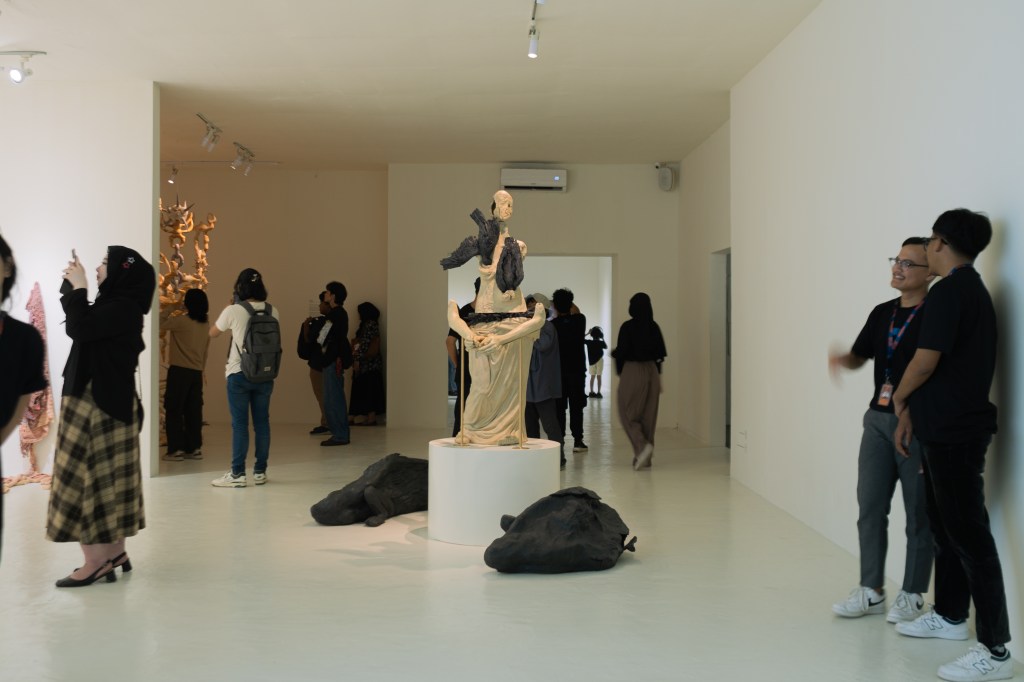
Having visited art festivals multiple times, I often find myself feeling tired or fatigued, even though I genuinely enjoy every work on display. I believe that to truly appreciate all the artworks, a single visit to the exhibition is simply not enough. Nevertheless, among the many pieces presented, I want to recall some of the most memorable ones from my first experience.
The words in Syagini Ratna Wulan (Cagi)’s The Labyrinth I Become are quite thought-provoking. Cagi frames the relationship between imagery and the eye as an object of contemplation. She highlights the phenomenon of Homo digitalis—humans who interact or ‘act’ in the digital world—now undergoing depersonalization, banalization, and disembodiment of the self. This occurs when, simply by moving their thumbs, they act instantly or reflexively, feeling their existence as global wanderers floating in an advanced internet world. Each time I passed this work, I noticed many people photographing the words.
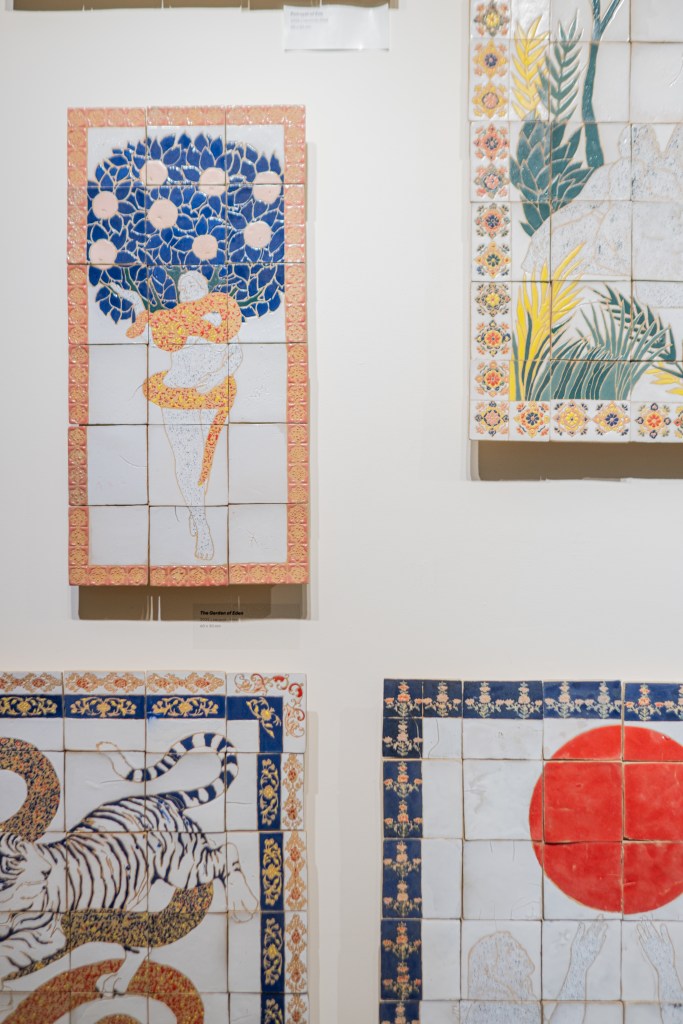
Zuraisa’s Trace of Eve’s Good Deeds successfully held my attention. My personal fascination with ceramics, particularly decorative ceramic tiles, led me to appreciate it more deeply. This work features female figures with body shapes often considered less than ideal by society. In stark contrast, they are accompanied by animal figures—tigers and snakes—presenting a metaphor for aspects of masculinity that are not binary-opposed.
Near Zuraisa’s work, a striking all-white installation, spanning from floor to ceiling, caught my eye. It was Rupa Tan Matra by Veronica Liana, one of the Young Artist Award (YAA) 2025 winners. The work captivated me simply because it used the same material and color to form replicas of everyday objects. It felt as if I were in a 3D SketchUp model file awaiting a V-Ray render. After reading more about it, I fully endorsed the artist’s intended message.
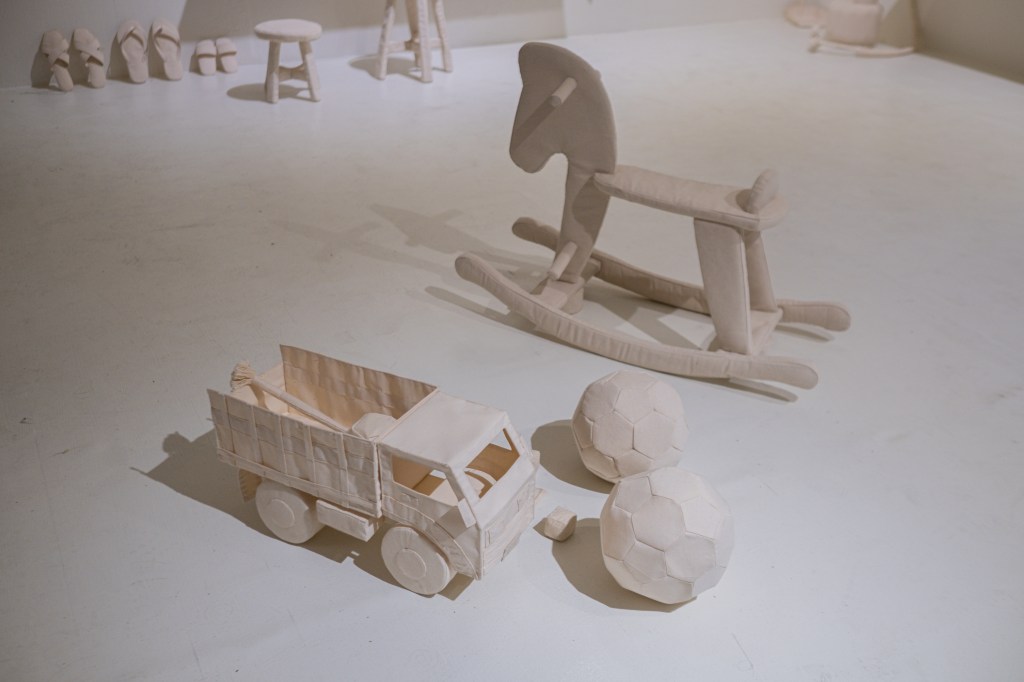
While standing before this artwork, I overheard a conversation between a young girl and her father. “Dad, isn’t this piece finished yet? The floor is still wet.” That innocent question was uttered as she saw the installation’s floor reflecting light like wet, uncured paint. I smiled upon hearing it—not to mock the work—but because I was genuinely pleased to hear such a question in a gallery filled with art I’d been trying to appreciate while constantly deciphering its meaning.
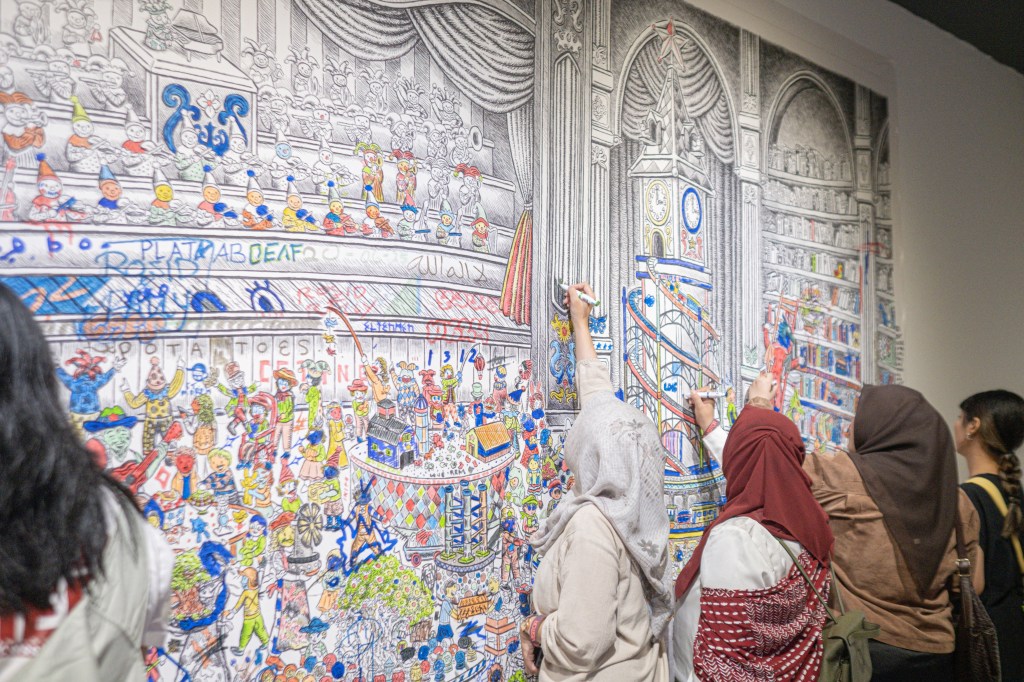
Through The Playroom, Darren Chandra, an artist diagnosed with Asperger’s Syndrome at age three, presents an interactive work. A larger-scale copy of his original 50 x 70 cm drawing is affixed to the wall, serving as a play space for visitors. Equipped with a box of colored markers, the work invites active participation: visitors can color, or even add details or humorous drawings. This piece vividly embodies Heri Pemad’s earlier vision of making visitors an integral part of ARTJOG, directly involving them with the exhibited artworks.
Tubuh Amalan by Yoshi Fajar Kresno Murti features a fragment of a tajuk—a dome/tower structure—from the ‘Adz-Dzakirin’ Mosque, currently undergoing renovation in Dusun Clumprit, Samigaluh, in the Menoreh hills, his hometown. This work is rooted in the communal effort of the villagers, who are dedicating their energy, thoughts, materials, and even monetary contributions to their mosque’s renovation. Yoshi Fajar critiques the very word ‘amalan,’ asserting that the villagers do not understand ‘amalan’ as a separate motif; rather, their very lives and actions are the embodiment of amalan. Complementing the installation, a donation box is provided, allowing visitors to contribute funds for the mosque’s construction—a tangible way to involve public participation in art.
If Indah Arsyad’s Echoes of Disquiet aimed to make visitors feel—at least somewhat—what it’s like to be an aquatic creature in the current ecological conditions, then I can confidently say this work is quite successful.
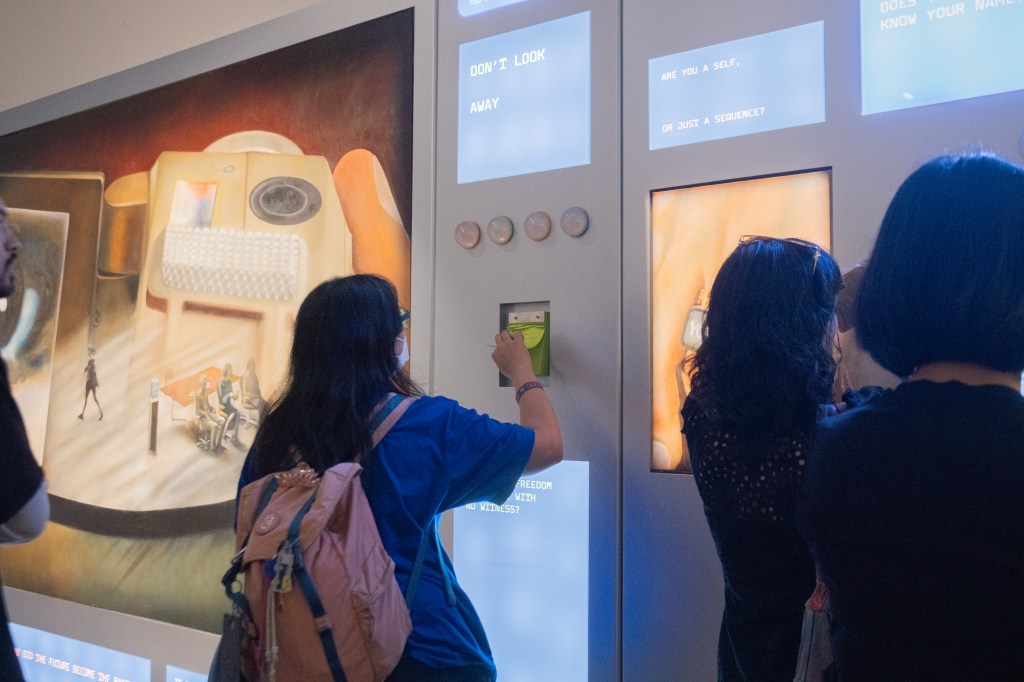
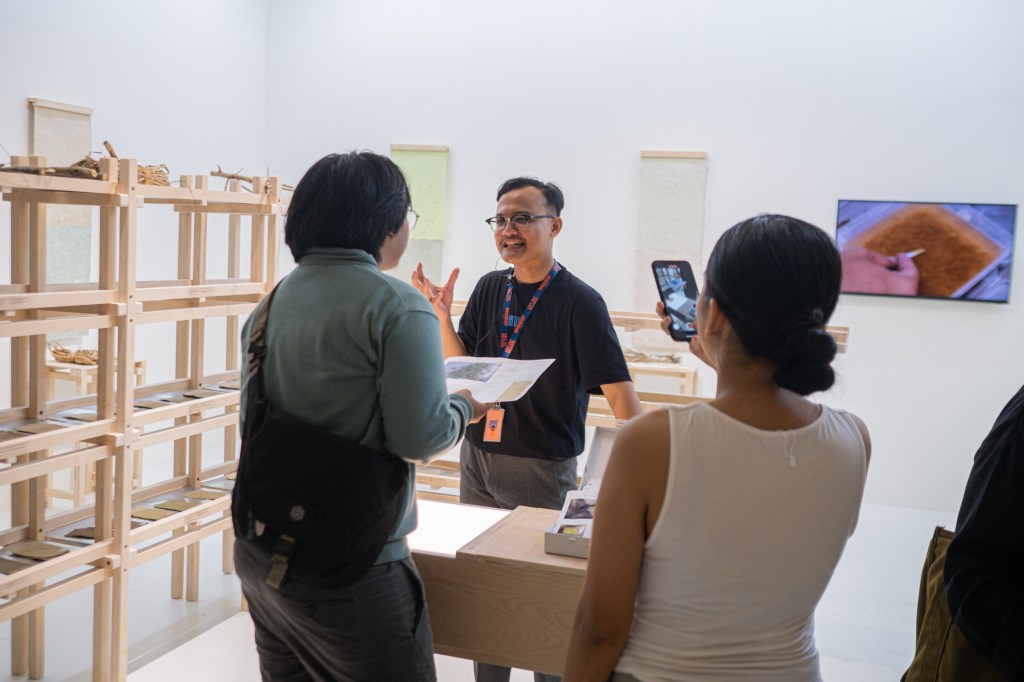
Sultan Putra Gemilang’s Pulse of Togetherness emphasizes interaction and participation between visitors and the artwork within an exhibition. This piece is a more developed version of his residency work from Aomori, Hachinohe City, Japan, in 2024. In this work, Sultan—fondly called Gilang—utilizes coins as a medium of exchange. From his research, Gilang believes that coins, often dismissed as mere loose change, are more than just transactional tools. He is convinced that coins symbolize human intentions and hopes, possessing a deeper dimension beyond their nominal value.
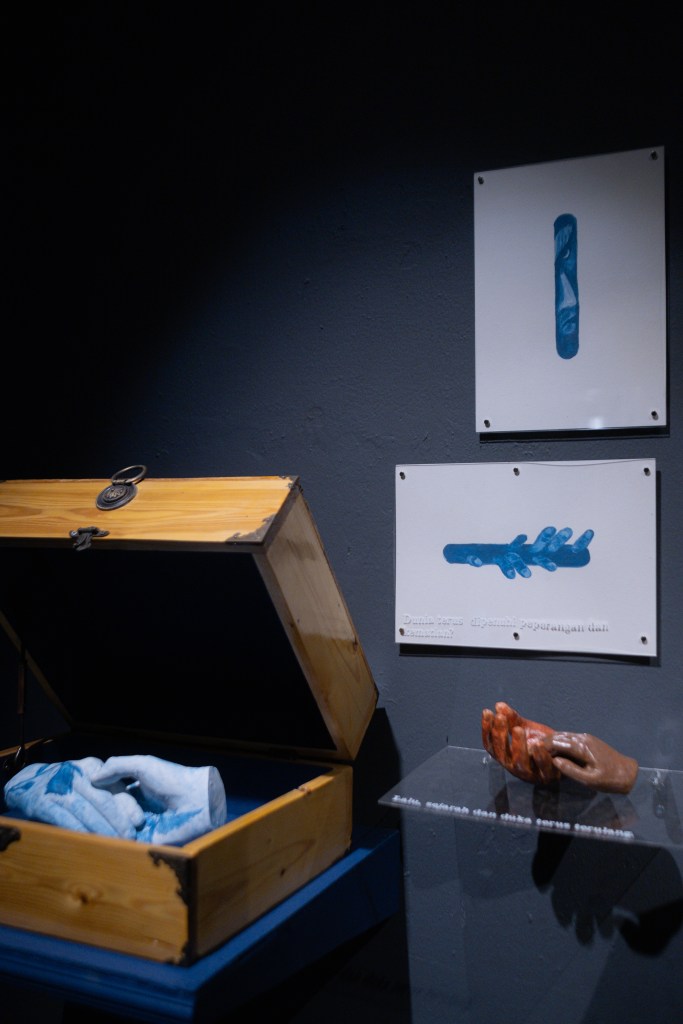
In Japan, there’s an ancient tradition called Omikuji. At Shinto or Buddhist shrines, people draw a fortune slip (oracle) after inserting a coin into a donation box. These customs and events inspired Sultan’s artistic concept.
A pair of giant, upturned palms, painted on a ceramic arrangement within this work, represent a symbolic space that gathers universal values such as hope, hard work, and prayer. The reverberating echoes from the coins clanking as visitors throw them to hit the ceramic surface reveal the true power of coins as a collective, not just scattered loose change. These collected coins will eventually be donated as a form of contribution or ‘amalan’ from the artist.

Concluding Reflection: Re-evaluating the Function of Art
The works I’ve briefly reviewed here represent only a fraction of what was showcased at ARTJOG 2025. After tracing back the most memorable pieces, I arrived at a provisional answer to my initial question: what is the purpose of art when it remains unable to halt crucial issues like war?
Perhaps, engaging in art is a manifestation of gratitude. We are gifted with a comfortable enough life to contemplate things beyond basic necessities—such as easy access to food, decent shelter, and freedom from the threat of bombs disrupting our sleep. With this blessing, we gain the power to voice the oppressed, to present works that provoke questions and disturb our comfort zones.
Public Programs and ARTJOG Ticket Information
Beyond the exhibition halls, performa•ARTJOG, fully supported by Bakti Budaya Djarum Foundation, will take place weekly throughout ARTJOG 2025. In addition to featuring performers from open calls, performa•ARTJOG specifically invited Bottlesmoker (Bandung) along with Rumah Atsiri Indonesia as commissioned artists to interpret the Motif Amalan theme through performance art. performa•ARTJOG also collaborates with several performance producers to present special shows, such as with Garasi Performance Institute featuring works by Ishvara Devati (performance artist) and Lembana Artgroecosystem (art and agriculture community). Furthermore, in collaboration with Liquid Architecture, it will present a performance by Tralala Blip (a group of disabled musicians from New South Wales), and IFI Yogyakarta will feature Ko Shin Moon (an electronic music project) and Rouge.
Throughout its duration, ARTJOG 2025 – Motif Amalan is supported by signature programs like Exhibition Tour, Meet the Artist, performa•ARTJOG, ARTJOG Kids, Book Launch and Review, Merchandise Project, Artcare Indonesia, Jogja Art Weeks, and Love 🤟 ARTJOG. There are also new programs, including Special Project, Spotlight, and The Others Lab.
ARTJOG tickets can be purchased via the website and on-site counters for IDR 80,000 (adults) and IDR 50,000 (children). Further information on schedules and programs is available through ARTJOG’s social media and website.
 readesignmagazine.com
Leave a comment